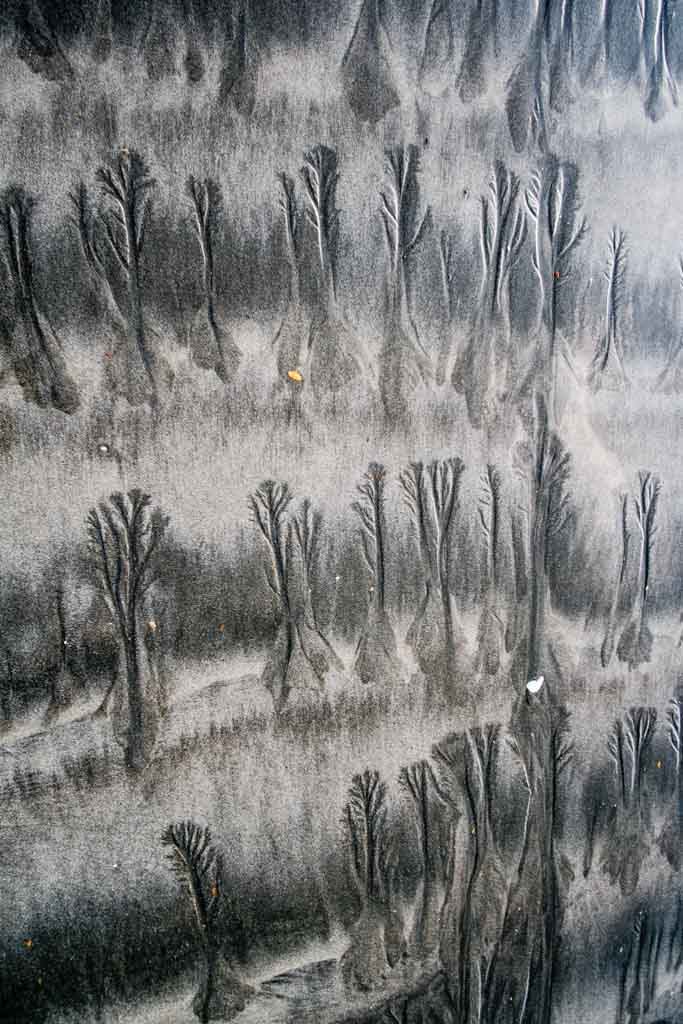
 (Patterns in the sand, Oneroa Beach, Waiheke)
Any Guesses?
Image
1

(Patterns in the sand, Oneroa Beach, Waiheke)
Waiheke Island, Hauraki Gulf, New Zealand
By: Kerry
 Waiheke Island – 45 minutes by ferry from downtown Auckland in the Hauraki Gulf – is known for its boutique wineries. But even better than its fine wines is the network of 100 or so kilometres of walking trails, collectively known as Te Ara Huru. We spent January cruising the Hauraki Gulf islands, with much of our time on Waiheke. We covered most of the western half of the island’s walking tracks, in addition to the Stoney Batter walk (on the far eastern side) on New Years Day.


The Stoney Batter Walk, New Years Day
Our favourite was the Headlands walk, starting from the little township of Oneroa and tracking along the cliff edges and beaches of the north-east and western coasts. Each climb to a high point revealed astonishing views across the island and the Gulf: craggy black cliffs sprouting huge, gnarled, scarlet-flowering Pohutakawa trees, and rocky islands dotted across sparkling, tropical-hued water stretching all the way to the Auckland city skyline.


The Headlands Walk, Waiheke Island
And on every cliff top, there was at least one example of the Kiwi penchant for choosing the most spectacular but inaccessible building site and constructing a formidable and extravagant architectural statement – apparently some of these massive ‘piles’ sell for upwards of $15 million. The track winds up and down to pretty beaches and secluded coves (in one of which I discovered my dream home – a modest ‘pile’ by comparison, with its own private pebble beach sheltered within a tiny cove and with a perfect northerly aspect), skirts around vineyards and, on the homeward leg, passes a few cellar doors where a crisp glass of pino gris does wonders to restore one’s energy levels.
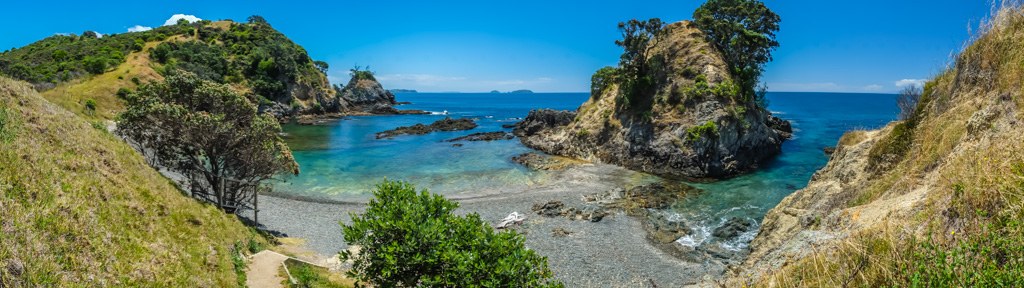
My future view-from-the-front door…
When my friend Elaine came to stay for a few days, the biennial Headlands Sculpture Exhibition was strung along the walking track, with some whimsical and impressive artworks. In her inimitable style, Elaine also shouted us to a delicious lunch and wine tasting at the Mudbrick Winery. But we made the mistake of mis-judging the tide: when we got back to Oneroa, our dinghy was high and dry and wasn’t going to float for another hour or so. Just as well Elaine had bought a bottle of spark en route!


Hunter-gathering was high on the agenda as we pootled around the Gulf islands with the Kiapas. We caught a few fish, and even a couple of crayfish, but the highlight was diving for scallops. Lionel, Irene and I would dive (tanks and full wetsuits, including hoods – the water’s not quite tropical temp) while Damian manned the dinghy. It took a little while to get your eye in, but once you did, it was fairly easy to spot the shallow indentation in the sand marking the outline of the buried scallop. We managed to catch our quota (20 per person, minimum 10cm diameter) in about 10 metres of water on less than half a tank of air. 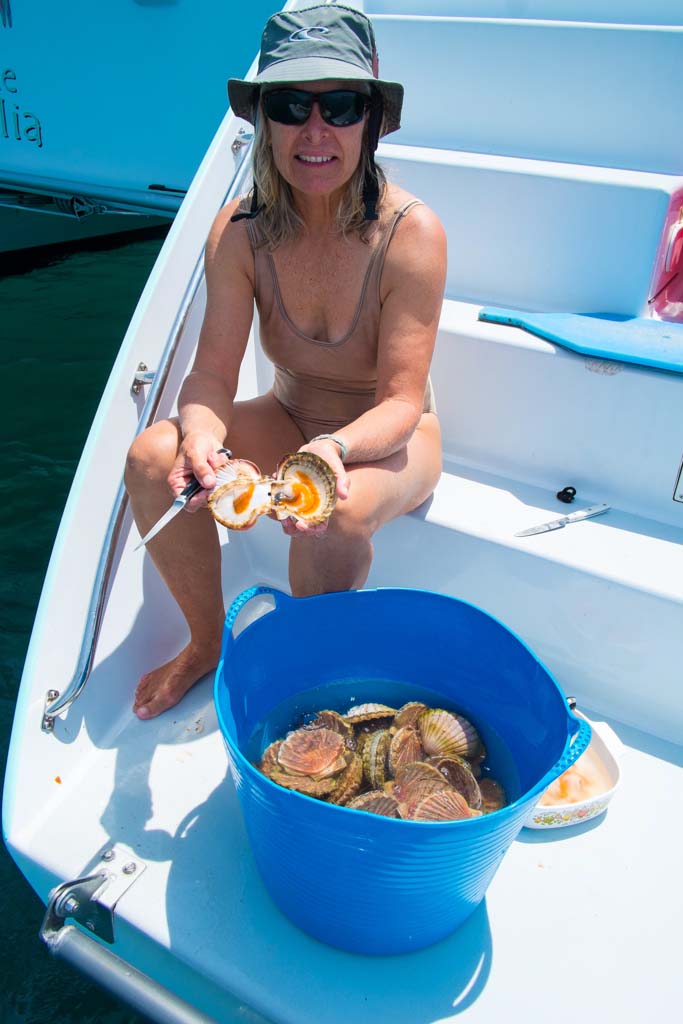
And oh, were they ever sweet and succulent – the most delicious seafood I’ve ever tasted.
After all the evil weather we’ve endured over the winters here, we had a whole month of perfect sunny days – who knew Inzud could turn on weather like it? We climbed Rangitoto (the perfectly symmetrical, dormant volcano that can be seen from anywhere in the Gulf); met the peacocks on Kawau Island and the myriad little birds (including the tuis) on the sanctuary of Tiritiri Matangi; hiked on Motutapu and Ponui and dived on Rakino.


Finally, after two and a half years of being NZ-based, we’ve been able to really enjoy cruising in New Zealand. We’ve only seen the Hauraki Gulf, and there is so much more to see, but even so, we rate it as some of the best cruising we’ve done anywhere in the world.

Oneroa beach, Waiheke
~~~ ><(((°> ><(((°> ><(((°> ~~~
Waiheke Island, New Zealand.
By: Kerry
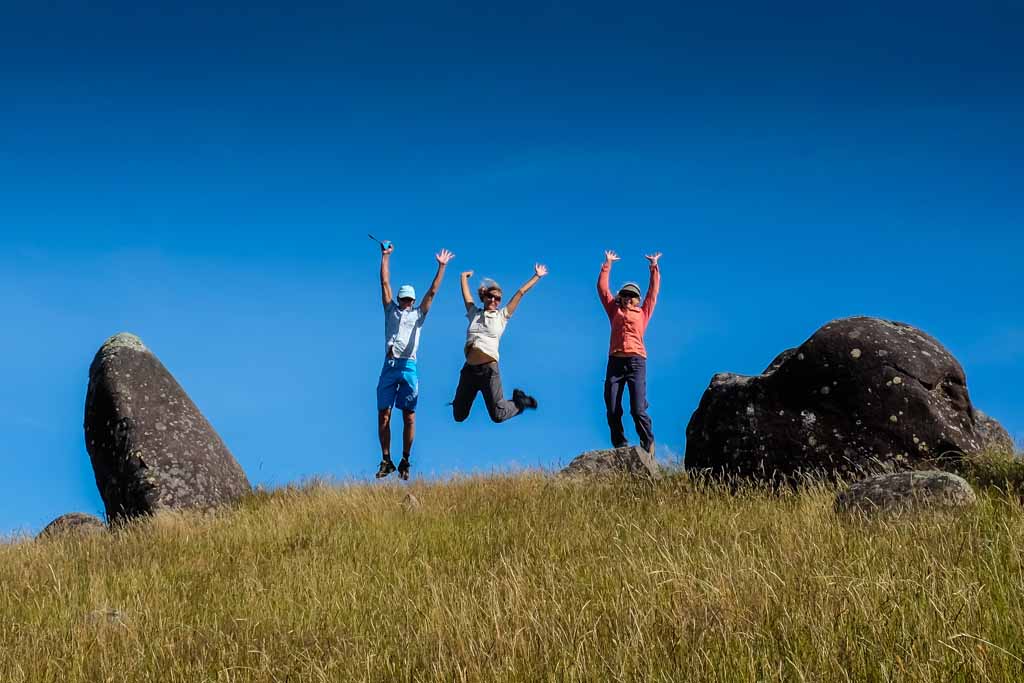
We are anchored in Man o’ War Bay, Waiheke Island, in the Hauraki Gulf. It’s calm, sunny and very, very beautiful. We were here for NYE and – much to our surprise and delight – there were no dragged anchors, drunken fools, or badly behaved yobs, despite the wind swinging 180 degrees soon after midnight, with the potential to cause complete chaos. In fact, we were the last boat to bed at around 2.30. We had friends on board for drinks and a BBQ and a bevvie or three. A really fun evening.
And we shaped up well enough to do a hike today to Stoney Batter on the NE tip of the island – stunning scenery and the Pohutakawa trees are all covered in crimson flowers!
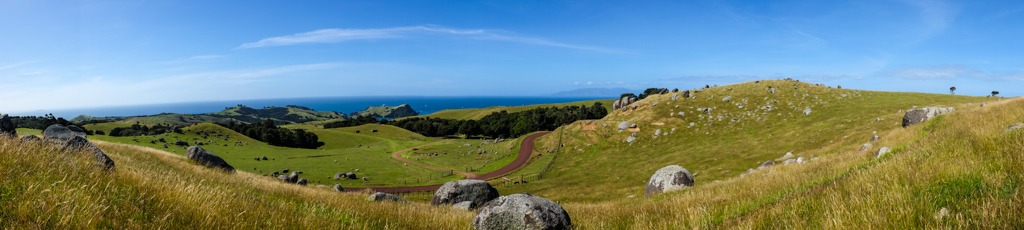 Plans from here are… vague. We’ll hang around here a few more days – the sun is shining (though the water’s too chilly for my liking!) and the fish are biting.
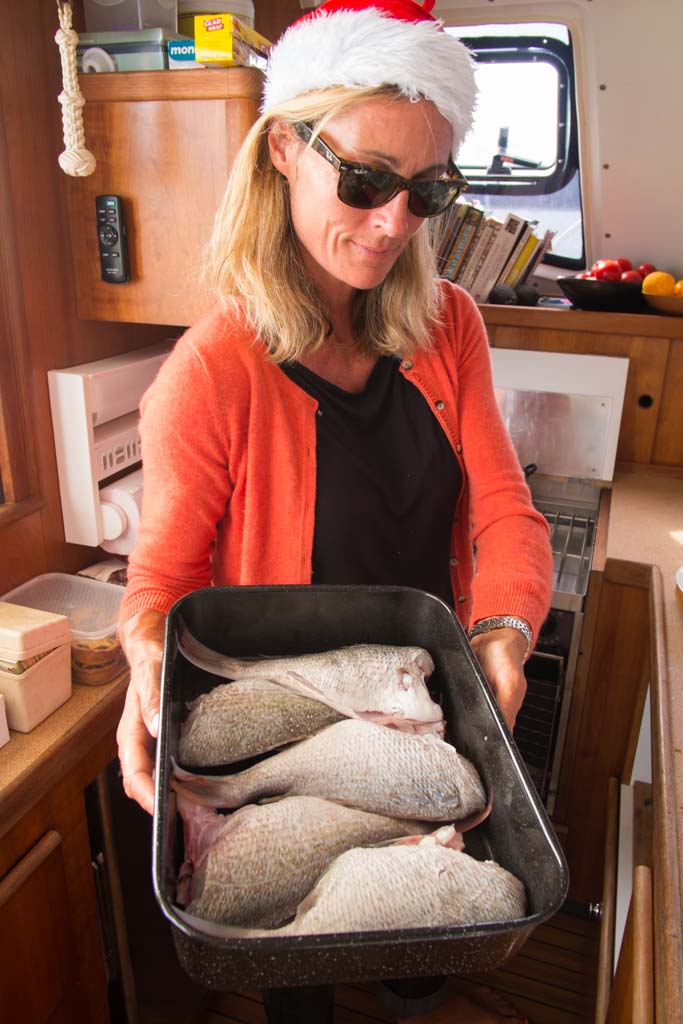 In case you were wondering, we managed to hook a couple more snapper on Christmas morning, just in time for five of us to have one each for lunch! Yummo.
~~~ ><(((°> ><(((°> ><(((°> ~~~
Whangarei, New Zealand
By: Kerry
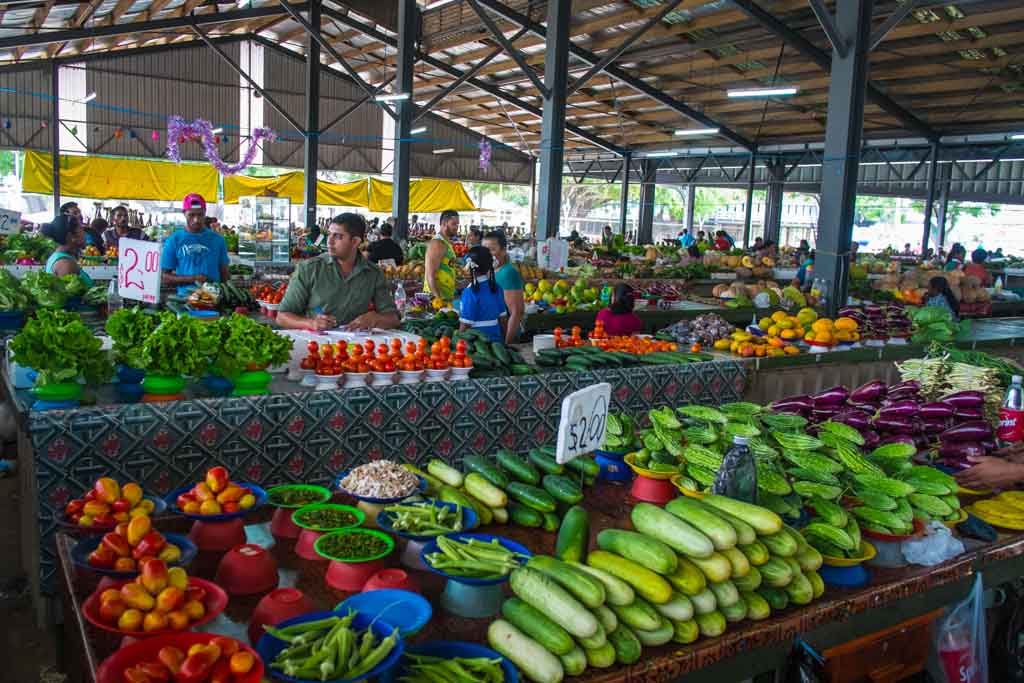 It crossed my mind that it would be a good premise for a reality tv show: drop the contestants in a developing country and tell them to find a taxi to the nearest town, which is half an hour away and where they’ve never been before. They then have to do the grocery shopping for a week at sea (ie you can’t forget anything), get back to the boat and leave port before they get busted by Immigration.
All in under two hours.
When we left Fiji, we cleared Customs and Immigration at Vuda Point. We’d been led to believe we’d have 24 hours to leave the country and that we’d be able to do the provisioning after we’d cleared. But the Immigration official made it plain that we had to be gone in an hour.
When I pointed out that we had nothing to eat, the official reluctantly relented and said we could go ashore to buy some food. “But make it quick.”
Trouble was, there was nothing available ‘ashore’ at Vuda Point. So while Damian stayed on board, Verdo and I jumped in a taxi and headed for Lautoka, 30 minutes away. We started at the market, where the fruit and veg were spread over a couple of acres. From half a dozen different stallholders, we piled up pawpaws, bananas, potatoes, beans, bok choy, tomatoes, lettuce, cucumber, and whatever else we could find – the variety wasn’t huge, but with a bit of picking and choosing, the quality was great.
Then we headed across the street to the supermarket, where the aisles were blocked by large, idly browsing locals, and where everything was where you least expected to find it. No problem – after doing a few circles and Twister-like manoeuvres I’d found everything I wanted.
It was at this point that our taxi driver, Mohamed, who was supposed to be waiting for us, went AWOL. Nowhere to be seen and the clock was ticking…
Eventually, Verdo phoned Damian back at the marina, who spoke to another taxi driver there, who phoned Mohamed, who then appeared and we loaded up our umpteen bags and boxes. We sped back to Vuda Point – stopping en route to buy a heap of mangoes from a friend of Mohamed’s at a roadside stall – piled it all in the dinghy, zoomed out to the boat, unloaded it, pulled up the dinghy and high-tailed it out of there.
All in under two hours.
We would have totally nailed the reality show challenge.


Provisioning (aka grocery shopping) when you’re cruising is hardly ever as simple as driving down to Woolies. Sometimes it’s slim pickings, like in the Ha’apais last year, where finding a lettuce was a challenge.
At other times, there’s an overwhelming abundance, like at the Saturday Growers’ market in Whangarei, where the locally-grown, in-season produce is so beautiful and so delicious I have a River Café moment every time I go.
We’re now pretty much ‘locals’ in Whangarei, so the stall holders all know us (‘Welcome back’ they all said last weekend, our first back from Fiji) and I come home laden with fragrant herbs, the best grass-fed beef and home-made chorizo, golden kiwifruit, organic mushrooms and avocados, and award-winning cheeses.
There are always beautiful flowers, too: this week I have a bunch of deep pink and canary yellow callas. Early in the year, I buy bunches of electric blue and hot pink water lilies that open and close with the light and whose stems twist and warp in the vase like alien beings.
We almost always meet some colourful characters along the way. Our first stop of a Saturday in Whangarei is to have a chat to Steve, a bald, goatee-toting dude in tight black jeans who makes the best coffee in town out of the back of his van. He and Damian compare barista notes and music collections and Steve usually has a tale to tell of his latest encounter with the local constabulary, or misadventure with firestick juggling…


In Fiji I met Anjee – glowing in a fiery orange sari, wearing half her body weight in bling, and beginning and ending every sentence with a strongly-accented “Darling!” – who has a vegetable stall at the markets near the airport in Nadi. The day I met her, she was surrounded by enormous, brilliant green piles of lettuce and bok choy and the smell of coriander. She seemed to be giving as many orders as she was taking.
Anjee has a business called Farm Boy that delivers fresh fruit and veg just about anywhere. While we were at Musket Cove, and even way up north in the Yasawas, Anjee was our main source of fresh produce. I’d send her an email and she’d pack up the order and put it on the next ferry. I’d meet it off the ferry, or have it delivered to the nearest resort and collect it from there.
When I asked her about payment, she said, “Just pay me next time you’re in Nadi, darling.”
There was always a surprise element: if she didn’t have exactly what I’d asked for, Anjee would improvise, which was fine.
Occasionally the boxes would arrive looking like they’d been dropped from a height (which they probably had, by the ferry company). Once, when I’d ordered a dozen bananas I received an entire 12kg box, which arrived very ripe and looking like they’d been run over with a wheelbarrow. No problem: Anjee issued a credit and all the surrounding boats shared in the makings for banana bread.
The Yasawa Islands are surprisingly barren as they lie in the rain shadow of the main island, Viti Levu, and the locals don’t grow much in the way of produce – or at least not for sale. Pawpaws, coconuts and bananas (plus starches like taro and breadfruit) are about all that is readily available.
An exception was when we were at the Blue Lagoon, where we heard about a local farm. We jumped in the dinghy, along with Steve and Michelle (from Citrus Tart), negotiated the reefs and headed up a narrow, mangrove-lined estuary until we ran into a couple of burly local boys carrying machetes. Always a little disconcerting…
We called out “Bula!” and they pointed their machetes in the direction of a couple of rough-hewn buildings. We waded ashore and were met by a trio of laughing Fijian ladies who offered us cold drinks and then insisted on making us omelettes for lunch. We talked politics, families and their memories of the making of the Blue Lagoon movie before they pointed us up the hill.
It was spoiling for a storm as we headed uphill along a rough path, turned right at the mango tree (as directed), met a bunch of goats who looked surprised to see us, eventually found the farm and met the young farmer and his wife, who asked us what we’d like.
We sat on a fallen tree trunk while they went off to harvest the fruit and veg to order: bok choy, peppers, pawpaws, bananas, mangoes, lettuce, basil (!), tomatoes, bush lemons, limes and fresh eggs.

Produce picked to order
It started to rain… and then it bucketed down. Soaked through, we slithered back down the path to where the ladies were still laughing, and to the dinghy – which was now waist deep as the tide had come in.
We sped the couple of miles back to the boats with eyes slitted against the stinging rain.
At least it was warm rain, compared to my pre-departure extreme-shopping provisioning trip in Whangarei…
For the week before we left NZ in July, we’d been pinned to the dock with hurricane strength winds. The day I drove in to Whangarei to do four months’ worth of provisioning, it was blowing dogs off chains and raining freezing sideways bullets. I wrote about it here, but I didn’t mention the day’s finale, which was a cracker.
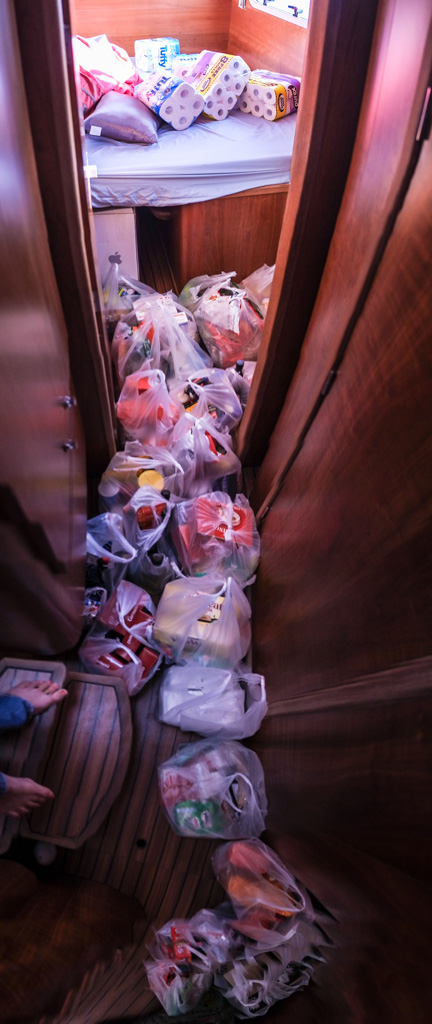
Some of the dry goods, leaving NZ
After running various errands and the gauntlet of two supermarkets, looking like a sodden fireman in my foul weather gear, I detoured to pick up some cruising guide info from friends Craig and Bruce on their catamaran, Gato Go.
The boat was up the river, tied to a rickety dock comprising several sections. I picked my way in the pitch dark and pelting rain to the boat, had a chat with the boys, collected the information and went to leave. Craig flashed a torch on the dock. I saw what looked like solid ground, took a step onto it… and found myself up to my neck, out of my depth, in the freezing, flooded, muddy water of the Whangarei River.
Fortunately, I somehow had the foresight to keep my handbag (with phone, wallet etc in it) in left hand and car keys in right hand, above my head. The pontoon was above my head height, but I managed to haul myself out, foul weather gear and all.

Shopping list for the Fiji trip
Craig and Bruce kindly offered me a hot shower and one of their tracksuits to get home in, in lieu of my sodden clothes. The trouble was, I hadn’t finished provisioning: I still needed to buy alcohol…
So I drove to Countdown (Woolies, in NZ) and wandered the aisles in my oversized man’s tracksuit, bedraggled hair and bare feet. I arrived at the checkout with a trolley full of booze, leaving wet
footprints behind me.
And the best bit? The checkout chick didn’t bat an eye!
~~~ ><(((°> ><(((°> ><(((°> ~~~
Waiheke Island, New Zealand
By: Kerry
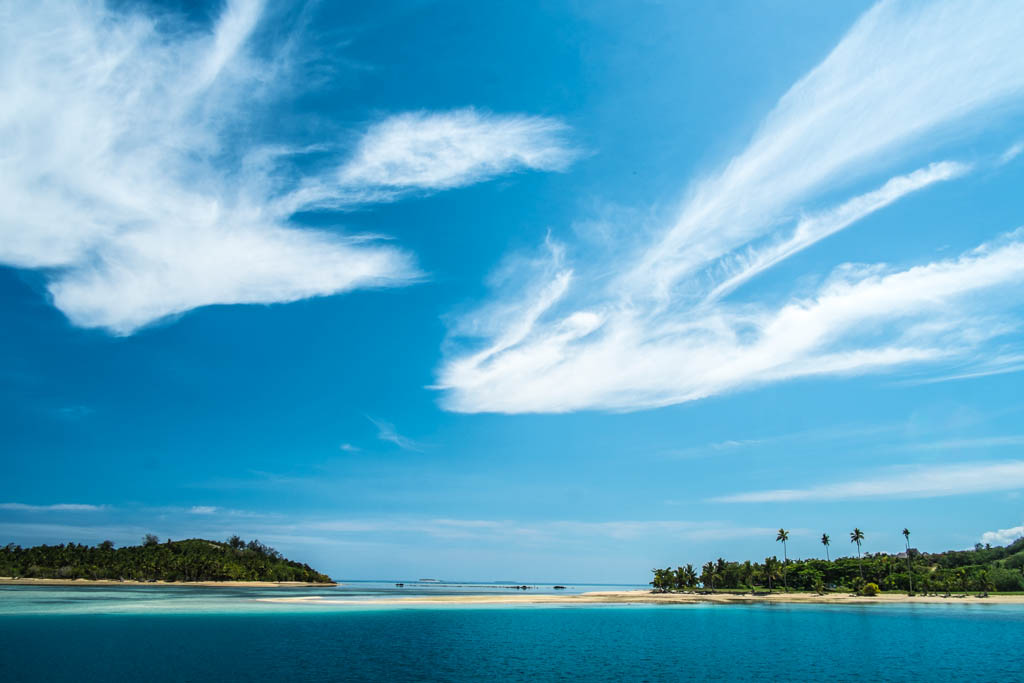
When the tallest thing around is a palm tree, the sky seems a whole lot bigger.
Call me a nerd, but one of the things I most enjoyed about Fiji was the extravagant cloud formations. Almost every day, there would be some vast, abstract masterpiece splashed across the sky.
Often, there would be a whole catalogue of cloud ‘types’ jumbled up together: sheep’s wool cumulus and mare’s tails, a mackerel sky, lenticular pancakes and anvils of thunder.
I left it a bit late in the season to make any real photographic study of them, but here’s a selection of Fiji skies…
(Click on a photo and you get a pop-up gallery. To exit the gallery, click the X that appears at the top left of the black side panel when you run your mouse over it).


~~~ ><(((°> ><(((°> ><(((°> ~~~
By: Kerry
 The second time I hitched myself to a kite, I made the mistake of glancing down to see where to place my foot. In the split second it took me to look up again, I’d made a Superwoman-like leap about four metres into the air – much to the amusement of all onlookers.
As I hurtled about 10 metres forward, I had time (in that slow-motion vortex you experience in the grip of an adrenalin rush) to look down and hope, helplessly, that I wouldn’t land on the coral below, before I face-planted into deep water.
With the wind blowing a little over 20 knots, the kite took off with me attached, being ‘body-dragged’ through the water: just as I was supposed to do. Woo-hoo!


Whenever we’ve been in Musket Cove and the tides (exposing the sand bar) and winds (15 knots or more) have aligned, kitesurfing guru Lionel has been giving us kiteboarding lessons. We started out with a one-square-metre training kite on land. Damian then sustained his golf wound, and couldn’t progress to the next step, so the class came down to the girls: Michelle, Suzie and me.
Suzie started earlier in the season and bought her own gear. She’s a step ahead of Michelle and me and, in the last week before we left, managed to crack it, getting up on her board and tearing across the bay, flat out.
Michelle and I are still at the body-dragging stage, where we fly a seven or nine-metre kite and get dragged through the water without the board attached to our feet and the added complication of having to steer the board as well as the kite.


I’d tried body dragging only once before my Superwoman act. This time – once I landed and the kite took off – I quickly steered the kite into the fly zone, lay on my back with my leading arm extended to act as a keel, and managed to body drag up-wind, with (according to the guru) perfect form. I was quite chuffed.
The interesting bit came when I tried to tack and the kite momentarily passed through the power zone, launching me into the air again…
Maybe next season we’ll get board-borne.


*Thanks to Graham Keating, Maunie of Ardwell for additional pix.
~~~ ><(((°> ><(((°> ><(((°> ~~~
Waiheke Island, New Zealand
By: Kerry
I hope this finds you soaking in the Christmas cheer (though if you’re literally soaking in it, then I’m afraid you’ve peaked too early).
We are anchored off Waiheke Island in the Hauraki Gulf, near Auckland. We’re in a little bay called Owhanake and there isn’t a breath of wind at the moment. Very peaceful.
We sailed down from Whangarei last Saturday, in company with the Kiapas, the friends with whom we buddy-boated from Fiji.
Our plans for Christmas are, at this point, a little loose and weather-dependent. We’ll spend the day with the Kiapas (plus Suzie), and we are all in full-on hunter-gatherer mode as we’re hoping to catch a seafood feast for Christmas Day. Yesterday we gathered a pile of huge green lip mussels (turned into delicious bouillabaisse last night, with the addition of some kingfish caught by Damian the day before) and tonight we’re doing mussel fritters. The fishing lines have been out at every opportunity, but so far not much luck: we’re hoping to hook into a few snapper sometime in the next 24 hours.
The pressure is on, and the fishing comp points tally stands at Salty Lemons: 6 (1 for a hookup plus 5 for the Kingfish), Kiapas: 0.
Oh, and a warning… Damian is having an op on his schnoz in early February (he’s been looking through the catalogue, thinking something pert and upturned might be nice) so we’ll be in Oz from then until around the end of Feb and we’re looking forward to seeing as many friends as possible!
Meanwhile, we’re sending Christmas cheers and best wishes for the coming year.
Love from Kerry and Damian.
PS I was just joking about pert and up-turned. His op isn’t going to be quite so glamorous!
~~~ ><(((°> ><(((°> ><(((°> ~~~
Marsden Cove, New Zealand (Inzud)
By: Kerry  We’re baaa-aack! Tied to a dock for the first time in five months. We arrived in Marsden Cove, NZ on Thursday evening, exactly six days and 12 hours after leaving Fiji, And we arrived with a mast this time, so figure that’s gotta be a win!
Regular readers would be disappointed if there wasn’t at least ONE incident to report, though, right? Never fear!
The day before we left Fiji, Verdo went up the mast to do a rig check and discovered that the gennaker halyard block (the pulley that holds our biggest headsail up) was distorted and the pin attaching it to the head of the sail was bent. With no time to replace the block before departure, we jury-rigged another pin and put the sail back up.

The guilty block and bent pin
Several days into the trip, we went to use the sail for the first time. It lasted all of about a minute before the block exploded, dumping all 125 square metres of sail into the briny. Damian and Verdo managed to haul it back on board without any damage. All good.
The fun started when we tried to hoist it again. Because we couldn’t furl or contain the sail prior to hoisting it, we had to get it to the top of the mast as quickly as possible and then try to get the flogging acres of sail and miles of sheets (ropes) under control as quickly as possible.
So we got it hoisted without a problem, but it wouldn’t be that easy, would it?
As with everything on this boat, there is a lot of power, size and area that’s difficult to manage short-handed when it goes pear-shaped.
The sail was flogging wildly, and hence so were the sheets (attached to the clew, the outermost corner of the sail). Somehow, the flailing windward sheet (a very long rope) managed to loop itself under the leeward hull and jam itself into the dagger board casing on the bottom of the hull. Another case of ‘you couldn’t make this s**t up’.
We stopped the boat as best we could (it being the middle of the ocean and all), and I dived in and tried to free it. No luck. Verdo joined me, but the two of us couldn’t shift it. So it stayed there for the rest of the trip as we pondered various ways of trying to get it out. It meant we didn’t have a starboard dagger board for the rest of the trip, which cramped our style to windward, but compared to losing a mast, it was minor!
On another positive note, Damian’s leg started to heal properly the minute we left the tropics and his ‘bullet hole’ is now looking a whole lot better. Spoiler alert: I will post a couple of photos of it at the end of this for the medically curious, but if you’re at all squeamish, skip them!
This stretch of ocean between New Zealand and the tropics is regarded as one of the most treacherous on the planet. Of the four crossings we’ve now made of this Black Hole, this one was by far the easiest. For starters, we had Verdo as our crew: having a reliable and experienced third person on board, rather than just the two of us, made a huge difference in terms of reduced stress and sleep deprivation!


The weather was also a lot kinder than previous trips. Although we close-reached all the way (the wind never went aft of 60 degrees apparent), it never went above 25 knots true and we only had one day of crappy seas, so well and truly manageable compared to previous trips (see here, here and here).
And for the first time, we also buddy-boated with another boat: Kiapa, another 52-foot catamaran. While they’re the same size and both cats, Kiapa and Sel Citron are quite different boats. Kiapa is designed by Melvin and Morelli: it’s a light-weight, go-fast cruising cat, whereas we are about twice as heavy, thanks to a different construction and having quite a few more creature comforts. (Lionel, Kiapa’s owner, likes to call us the ‘fat chick in lycra’).
Nevertheless, we pretty much paced one another: Kiapa pulled away from us in light airs, but in stronger winds, we kept pace and had a much more comfortable trip in the rough stuff. It was great having the company and we stayed in VHF radio and visual contact all the way until the last night, when Kiapa peeled off to Opua and we continued to Marsden.


One bonus of buddy boating is the opportunity to take photos of each other under sail – the first time we’ve ever seen ourselves with sails up! These were all taken on the same day – easy to see the difference some weight makes… And this was on a light air day! Thanks to Graham Keating on board Kiapa for the pics of Sel Citron.
We felt a bit like the homecoming queen arriving: the marina staff, friends on other boats, even Customs and Biosecurity know us and gave us a warm welcome. It almost feels like home!
PS The gennaker sheet is now free from the dagger board, thanks to the combined weight, effort and brute strength of Damian, Lionel, Steve (Citrus Tart) and Graham (Maunie/Kiapa). Thanks, fellas!
PPS Here are some pix of Damian’s golf wound – close your eyes and move on if you’re squeamish! Never underestimate a coral cut. See background details here.


~~~ ><(((°> ><(((°> ><(((°> ~~~
Leaving Fiji
By: Kerry
It’s the end of the season: the first tropical low is starting to spin up to the northeast of us, heralding cyclone season, so it’s time to head south, back to New Zealand. We started looking for a weather window a week or so ago and now, as we sit here in Musket Cove, dabbling in ‘analysis paralysis’ – the cruising yachtie’s affliction brought on by looking at weather maps for too long, trying to decide the ideal time to leave – it’s an opportunity to finally catch up on the blog. It’s been a while…
I last wrote from Blue Lagoon, where the name ‘Brooke Shields’ is still on everyone’s lips, though just where and how much of the film was shot on location there is not really clear. It’s not so much a ‘lagoon’ as a sheltered waterway between several quite substantial islands, but on a sunny day, it lives up to its name, when the water practically glows in every shade of blue.

Blue Lagoon
We anchored off one of the sheltering islands, Nanuya Lailai (or Nanuya Sewa), which nestles up against the very upmarket and yachtie-intolerant Turtle Island, and circumnavigated both islands by kayak.
As we hugged the edge of the beautiful white-sand beach on Nanuya Lailai, a young whippet-sized dog, that we’d met the day before, trotted down to the shore to say hello, and followed us around the shoreline. When we got to a patch of mangroves, we thought she’d turn back, but she jumped in and swam after us.
There was no dissuading her, but there was nowhere for her to land, either, so when she eventually tired, I hauled her up on my kayak. She fell off a couple of times as she squirmed and tried to stand up, but then she settled down and happily sat between my knees as we headed out into the open water on the windward side of the island.
It took us an hour or so to get around, and it was a bit choppy at times, with waves coming over the kayak, but she seemed to quite enjoy it and only jumped off and swam ashore when we were rounding the last corner and headed for home.
A week or so later, we were further north in Sawa-i-Lau and I was talking to Abraham, the village chief, and I mentioned we’d been kayaking in Blue Lagoon. He suddenly stopped and said, “Was that you with a dog on your kayak?”
He’d happened to be on the windward side of the island the day we’d paddled past and laughed his head off when I admitted that yes, I was the crazy white woman who takes stray dogs on open water sightseeing cruises.
Meeting Abraham was yet another slightly baffling sevusevu experience. We’d arrived the day before and had been taken to see the ‘chief’ of the village, and were introduced to a smiling elderly lady who spoke no English. She took our kava and thanked us, but once again there was no suggestion of doing the full ceremony.
I was impressed that the chief was a woman, but next day, we met Abraham and heard that, in fact, he was the chief and he asked us to advise our fellow cruisers that they were obliged to do sevusevu with him, rather than with the caretakers of the ‘famous’ caves, which are the main attraction of Sawa-i-Lau.
Seems there is a bit of competition for cruisers’ kava…


To date, we haven’t done a full sevusevu ceremony anywhere, despite presenting bunches of kava to village chiefs on half a dozen occasions. It seems the locals in this part of Fiji are happy to receive the grog, but aren’t that fussed about ‘tradition’. In fact, our friends Di and Graham even did a ‘drive by’ sevusevu, when the said cave caretakers came up to their boat in a panga, asked for the kava to be handed over and then sped off.
So much for our fear of breaching protocol…
The ‘famous’ flooded limestone caves at Sawa-i-Lau were decidedly underwhelming, but the bay they are in is lovely, and we spent a hedonistic afternoon lolling about in gin clear water on the edge of a golden beach, drinking chilled wine with the Citrus Tarts.
The Mamanuca and Yasawa chain of islands extends for around 80 miles, south to north. We didn’t make it all the way to northern end of Yasawa, the top island, but we did find plenty of lovely anchorages along the way, quite a few of which we had to ourselves, including the beautiful, broad bay of Somosomo, on Naviti Island.

One of my favourites was just off Yalobi village on the south side of Waya Island, which lies about halfway up the chain. Waya is geographically the most dramatic island in the Yasawas, with steep green hills rising from the shoreline and crowned with massive basalt outcrops – the eroded evidence of its volcanic provenance.
Yalobi village sits on an arc of golden beach, embraced by rugged hills and fronted by a clear aqua bay. We hiked up above the village from where we could see all the way down the island chain – and look down on Sel Citron looking like a rubber ducky in a bathtub.


We spent several relaxing days kayaking and snorkelling, then we headed back to Denarau, with the intention of leaving for NZ to be back in time for friends Ian and Sue’s wedding on Pittwater. But once again, it was just as well we’re on the No Plan Plan…
Of course, there’s never a dull moment in our lives… In the course of a game of golf seven weeks ago when my family was here, Damian came a cropper while retrieving a ball from the beach ‘bunker’ at Musket Cove. He fell on a sharp rock on the shoreline and gouged a divot out of his shin. He went to the nurse at nearby Plantation Island Resort, who cleaned it, dressed it, and dosed him with antibiotics.
He stayed out of the water for three weeks, kept it clean, had more antibiotics and three penicillin jabs in his derriere – basically did all the right things. But it stubbornly refused to heal, developing an infection/abscess as coral-type cuts infuriatingly tend to do.
To cut a long story short, he eventually had to go to the doctor in Nadi, who took to it with a scalpel and ‘debrided’ the wound, leaving him with an elliptical hole the size of a 20 cent piece and about an inch deep. Even the doctor admitted it looked just like a bullet wound (he was worried about osteomyelitis, but an x-ray proved negative).
Since then, we’ve been hanging out in Musket Cove, while Damian has had to make weekly trips back to the doctor in Nadi to have it checked and dressed, which has rather stymied our travel plans, both here in Fiji and for heading back to NZ.
Who knew golf was an extreme sport??
It’s still a long way from healed (it’s probably only about a centimetre deep now!) but he’s been given the all-clear to travel. So we’re off to NZ!
This time we have a friend and extra crew member, Peter Verdon (Verdo) along for the ride – very experienced sailor and all-round good guy. The weather forecast is looking good, so we’re hoping (just for a change) for a nice, easy trip!
We are already underway, en route. I’m typing this as fast as I can before we lose internet, so might have to ‘edit’ it at the other end… We should be in Marsden Cove by next Friday.
~~~ ><(((°> ><(((°> ><(((°> ~~~
Musket Cove, Fiji

 Sel Citron